
At CrossFit Viroqua, we talk a lot about long-term health, strength, and performance, not shortcuts.
And when people ask me about supplements, I usually keep it simple:
Most people don’t need much.
But there is one supplement that consistently stands above the rest in terms of research, safety, effectiveness, and long-term benefit:
Creatine.
Let’s break it down.
What Is Creatine?
Creatine is a naturally occurring compound stored primarily in your muscles. Your body makes some of it in the liver and kidneys, and you also get it from food, mainly red meat.
Here’s the problem:
Most people don’t eat enough red meat to fully saturate their muscle creatine stores.
And if you are:
- Vegetarian
- Vegan
- Eating very little red meat
- Focused on lower-calorie diets
You are very likely under-consuming creatine.
Why People Who Don’t Eat Red Meat Need It Even More
Red meat is the richest dietary source of creatine.
If you don’t eat it regularly, your baseline muscle creatine levels are lower. That means:
- Less rapid energy production
- Less strength potential
- Less power output
- Slower recovery between high-intensity efforts
Research consistently shows that vegetarians often experience even greater performance improvements when supplementing with creatine because they start from lower baseline levels.
If you’re training hard at CrossFit Viroqua but avoiding red meat, creatine is not optional, it’s strategic.
What Energy System Does Creatine Help?
Creatine fuels the ATP-PC (phosphagen) energy system.
This is the system responsible for:
- Short, explosive efforts (0–10 seconds)
- Heavy lifts
- Sprints
- Double unders
- Box jumps
- Olympic lifts
Here’s what happens:
Your body uses ATP (adenosine triphosphate) as immediate energy.
ATP gets depleted rapidly during intense effort.
Creatine helps regenerate ATP faster.
That means:
- More reps before fatigue
- Heavier lifts
- Better sprint performance
- Improved power output
And in CrossFit, that matters.
Benefits of Creatine (Beyond the Gym)
Creatine isn’t just about bigger lifts.
Research supports benefits in:
1. Increased Strength & Muscle Mass
More training volume = more adaptation over time.
2. Improved Recovery Between Sets
Better repeated efforts.
3. Brain Health
Creatine plays a role in cellular energy production in the brain. Studies suggest benefits in cognitive performance, especially under stress or sleep deprivation.
4. Healthy Aging
As we age, we lose muscle mass (sarcopenia). Creatine supplementation combined with resistance training helps preserve lean mass and strength.
For our Legends athletes (50+), this is huge.
How Much Creatine Should You Take?
The evidence-based dose:
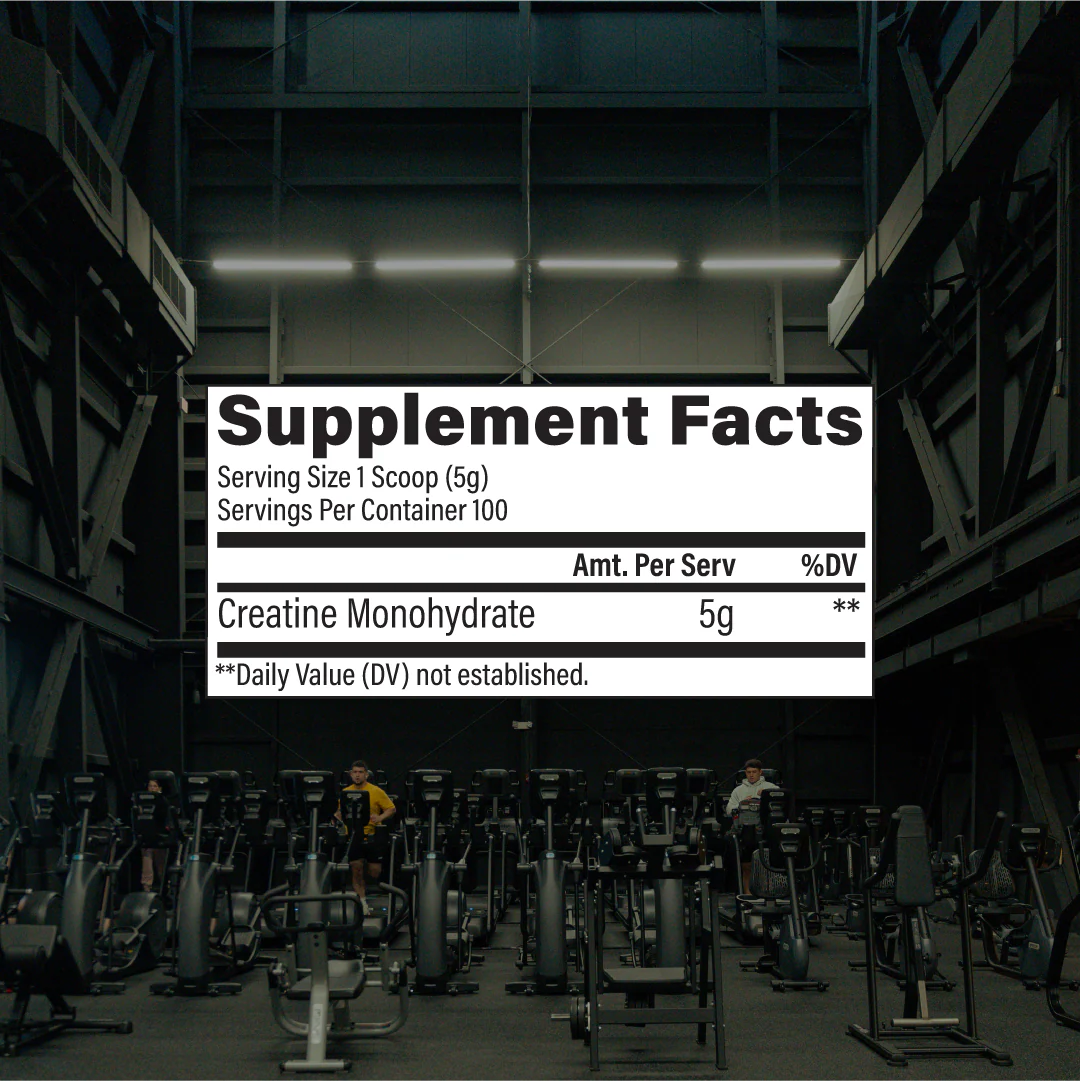
3–5 grams per day
That’s it.
You do NOT need:
- Fancy cycling
- Loading phases (optional, but unnecessary)
- High doses
Some people choose to “load” with 20g/day for 5–7 days, but it’s not required. Taking 3–5g daily will saturate your muscles over a few weeks.
Consistency > loading.
Creatine Monohydrate vs Other Forms
Here’s the simple truth:
Creatine Monohydrate wins.
It is:
- The most studied form
- The most effective form
- The most affordable
- The safest long-term
Other versions you’ll see:
- Creatine HCL
- Buffered creatine
- Creatine ethyl ester
- “Advanced” blends
None consistently outperform basic creatine monohydrate.
Many just cost more.
Look for:
- Creatine Monohydrate
- Ideally third-party tested
- Minimal additives
That’s it.
Does Creatine Cause Weight Gain?
Yes, but not in the way people fear.
Creatine increases intramuscular water retention, meaning your muscles hold slightly more water inside the muscle cell.
This:
- Makes muscles fuller
- Improves leverage
- Supports performance
It is NOT fat gain.
Most people see a 1–3 pound increase initially. That is normal.
Is Creatine Safe?
Creatine is one of the most researched supplements in sports nutrition.
Decades of data show:
- Safe for long-term use
- Safe for men and women
- Safe for older adults
- Safe for healthy kidneys
If you have pre-existing kidney disease, consult your physician first. Otherwise, for healthy individuals, it’s extremely safe.
Should You Take Creatine?
If you:
- Strength train 2–5 days per week
- Do CrossFit
- Want to improve performance
- Want to maintain muscle as you age
- Don’t eat much red meat
The answer is likely yes.
Creatine isn’t a magic pill.
But it is one of the few supplements that actually does what it promises.
Final Thoughts for Our CrossFit Viroqua Community
We’re not about hacks.
We’re about:
- Sustainable health
- Strength that lasts
- Energy that carries into life
- Aging with confidence
Creatine supports all of that.
If you’re curious whether it’s right for you, let’s talk during your next Goal Review.
Train hard.
Recover well.
Fuel intelligently.




.png)


